 6.5
Biography
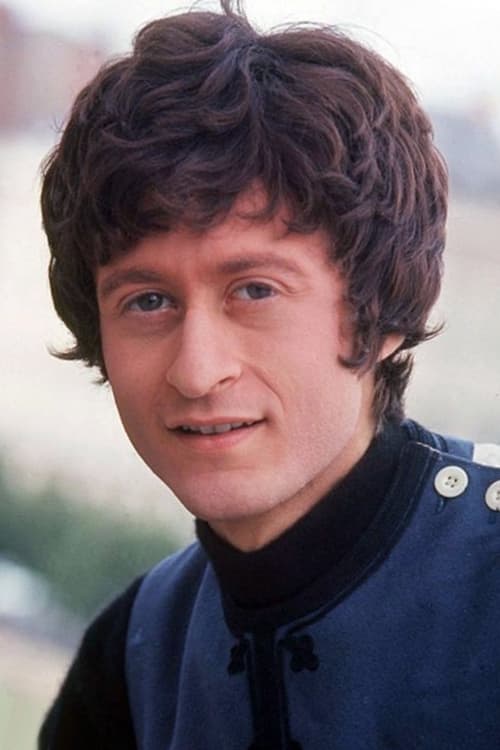
Michel Polnareff (born 3 July 1944, Nérac, Lot-et-Garonne, France) is a French singer-songwriter, who was popular in France from the mid-1960s until the early 1990s with his penultimate original album, Kāma-Sūtra. He is still critically acclaimed and occasionally tours in France, Belgium and Switzerland.
Michel was born into an artistic family: his mother, Simonne Lane (1912-1973), was a Breton dancer and his father, Leib Polnareff (Russian: Лейб Полнарёв) or Léo Poll (1899-1988) was a Russian Jewish immigrant from Odessa who worked with Édith Piaf. He attended the Cours Hattemer, a private school. He learned the guitar, and after his studies, military service, and a brief time in insurance, he began to play his guitar on the steps of the Sacré Cœur.
In 1965 Polnareff won a prize in Paris of recording at Barclay Records, but as part of the counterculture he turned down this opportunity. It was Lucien Morisse, then director at Europe 1, who made him sign with AZ. His first disc, La Poupée qui fait non (1966), was an unexpected success. Its new musical style and Polnareff's atypical image, crossed borders. During this period, he played concerts in Brussels for one week sharing the bill with Jeff Beck. In France he gained many hits such as "La Poupée qui fait non", "Love me, please love me", "Sous quelle étoile suis-je né?", "Ta-ta-ta-ta", "Âme câline" (Soul Coaxing), "Mes regrets", "Gloria", "Holidays", and "Tibili". Jimmy Page and John Paul Jones performed on hit single "Holidays".
Polnareff also played with his image: black glasses, fancy trousers, and ambiguous provocations. His song L'Amour avec Toi could not be played before 10 pm because it was considered "pornographic" at the time in France (the song is mild by today's standards). From 1969 on, Polnareff was hugely successful: tours, music videos, hits. He also became the target of scandalmongers.
Tragedy struck in September 1970, when his friend Lucien Morisse committed suicide. In the same time, he also suffered a relationship crisis. After a rest period in the Paris area, and long months in isolation healing from his depression, Polnareff gradually resumed touring. His health and his morale improved, but not his sight: he was forced to protect his eyes with thick, dark sunglasses. His problems didn't stop there. In 1972, a promotional poster for his 1972 Polnarevolution tour showed his naked buttocks. Although the scandal benefitted him commercially, it brought censorship and lawsuits.
Exile in the United States (1973–1984)
During a world tour, he learned that Bernard Seneau, his manager, had run off with his money leaving him broke. Unable to pay his debts, and crushed by the death of his mother, he left France for the United States, where he lived in anonymity. He was joined by his friend, Annie Fargue who became his manager and stayed in this capacity for many years. ...
Source: Article "Michel Polnareff" from Wikipedia in English, licensed under CC-BY-SA 3.0.
Known for
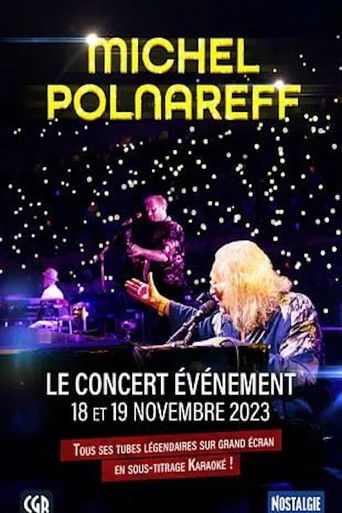
Filmography 28
- 2023 Movie
-
2023
Tous les chanteurs s'appellent Michelas Self (archive footage)Movie 8.5
-
2023
Le Gala des Pièces Jaunes 2023 : Le concert événementas Self - GuestMovie
-
2022
Sheila, toutes ces vies-làas Self (archive footage)Movie 7.5
- 2022 Movie
-
2016
Quotidienas Self - GuestTV 5.1
- 2014 Movie 10.0
- 2007 Movie 7.5
- 2007 Movie 5.5
-
2001
Star Academyas SelfTV 5.7
-
1998
Vivement dimancheas SelfTV 3.6
- 1993 TV 6.5
-
1985
Victoires de la musiqueas SelfTV 3.3
-
1975
Numéro unas SelfTV 7.5
-
1975
Les Rendez-vous du dimancheas SelfTV 6.0
-
1972
J'ai tout donnéas SelfMovie 9.3
-
1972
Midi trenteas SelfTV 6.0
-
1972
Le Grand Échiquieras SelfTV 8.0
-
1971
La Lucarne magiqueas A starMovie
-
1971
Samedi soiras SelfTV 6.0
- 1969 TV
-
1968
À bout portantas SelfTV 8.0
-
1968
Paris nach Notenas SelfMovie
- 1967 Movie
-
1967
Europartyas SelfTV
-
1965
Hör hin, schau zu!as SelfTV
-
1964
Die Drehscheibeas SelfTV 7.3
-
1959
Discoramaas SelfTV 8.0