Biography
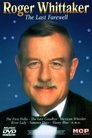
Roger Henry Brough Whittaker (born 22 March 1936) is a British singer-songwriter and musician, who was born in Nairobi to English parents. His music is an eclectic mix of folk music and popular songs in addition to radio airplay hits. He is best known for his baritone singing voice and trademark whistling ability as well as his guitar skills.
He is widely known for his version of "Wind Beneath My Wings" (1982), as well as his own compositions "Durham Town (The Leavin')" (1969) and "I Don't Believe in If Anymore" (1970). American audiences are most familiar with his 1970 hit "New World in the Morning" and his 1975 hit "The Last Farewell", which is his only single to hit the Billboard Hot 100 (it made the Top 20) and also hit No. 1 on the Adult Contemporary chart. He is also known for his renditions of "Ding! Dong! Merrily on High" and "The Twelve Days of Christmas". His final top-charting hit was "Albany", which scored No. 3 in West Germany in 1982.
Whittaker's parents, Edward and Vi Whittaker, were from Staffordshire, England, where they owned and operated a grocery shop. His father was injured in a motorcycle accident and the family moved to a farm near Thika, Kenya, because of its warmer climate. His grandfather sang in various clubs and his father played the violin. Roger learned to play the guitar.
Upon completing his primary education, Whittaker was admitted to Prince of Wales School (now Nairobi School). Upon completing his high school education, he was called up for national service and spent two years in the Kenya Regiment fighting the Mau Mau in the Aberdare Forest. In 1956 he was demobilised and decided on a career in medicine. He enrolled at the University of Cape Town in South Africa. However, he left after 18 months and joined the civil service education department as a teacher, following in his mother's footsteps. To further his teaching career, Whittaker moved to Britain in September 1959. For the next three years, he studied zoology, biochemistry and marine biology at University College of North Wales and earned a Bachelor of Science degree while singing in local clubs, and released songs on Flexi discs included with the campus newspaper, the Bangor University Rag.
Shortly afterwards, he was signed to Fontana Records, which released his first professional single, "The Charge of the Light Brigade", in 1962. (On the labels of the Fontana singles, he is billed as "Rog Whittaker".) In the summer of 1962, Whittaker performed in Portrush, Northern Ireland. He achieved a breakthrough when he was signed to appear on an Ulster Television show called This and That. His second single was a cover version of "Steel Men", released in June 1962. ...
Source: Article "Roger Whittaker" from Wikipedia in English, licensed under CC-BY-SA 3.0.
Known for
Filmography 48
-
2020
Schlager Goldas Self (archive footage)TV
-
2020
Unvergessene Legendenas Self (archive footage)TV
-
2010
Musikalische Reiseas SelfTV
- 2005 TV
-
2004
Servus, Hansi Hinterseeras SelfTV
-
2004
Willkommen bei Carmen Nebelas SelfTV 4.0
- 2004 Movie
-
2000
Starnacht am Wörtherseeas SelfTV
-
1998
Die Krone der Volksmusikas SelfTV
-
1995
Musik für Sieas selfTV
-
1995
Immer wieder sonntagsas SelfTV
- 1994 TV
-
1994
Höchstpersönlichas selfTV
- 1991 Movie
-
1991
Musik liegt in der Luftas Self · as Self - SingerTV
- 1989 Movie
-
1988
Flitterabendas Self - SingerTV 7.0
-
1986
ZDF-Fernsehgartenas SelfTV 2.8
-
1985
Melodien für Millionenas SelfTV
-
1984
Show & Co. mit Carloas SelfTV
-
1983
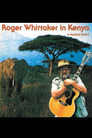
Roger Whittaker in Kenya: A Musical Safarias Self (host) · Executive ProducerMovie
-
1982
Night Musicas SelfTV
-
1981
Musikantenstadlas SelfTV 5.2
-
1981
Tag des deutschen Schlagersas SelfTV
-
1980
Show-Expressas SelfTV
-
1980
Verstehen Sie Spaß?as SelfTV 4.7
-
1977
Telespieleas SelfTV 9.0
-
1977
Please Turn the Pageas SelfTV 6.0
-
1977
Auf los geht's losas SelfTV 8.0
-
1977
Roger Whittaker: All My Bestas Self (performer)Movie
- 1976 Movie
-
1975
Système 2as SelfTV
-
1975
Musik ist Trumpfas SelfTV 6.0
-
1974
Die Montagsmaleras SelfTV 8.0
-
1972
Musikladenas SelfTV 8.0
-
1972
Don-Lurio-Showas SelfTV
-
1971
Mary’s Musicas SelfTV
-
1969
Die ZDF-Hitparadeas SelfTV
- 1969 TV
-
1968
Starparadeas SelfTV 10.0
-
1966
4-3-2-1 Hot and Sweetas SelfTV
-
1964
Die Drehscheibeas SelfTV 7.3
-
1964
Einer wird gewinnenas SelfTV 7.0
-
1961
Musik aus Studio Bas SelfTV 7.0
-
1959
Discoramaas SelfTV 8.0
-
1957
Zum blauen Bockas SelfTV 6.3
-
1955
Was bin ich?as SelfTV 7.3
- — Movie