7.0


Maurane
- Born
- Nov 12, 1960
- Died
- May 7, 2018 (aged 57)
- Birthplace
- Ixelles, Belgium
- Also known as
- Claudine Luypaerts · Claudie Claude · Claude Maurane
Biography
Claudine Luypaerts, better known as Maurane (12 November 1960 – 7 May 2018), was a Francophone Belgian singer and actress.
Brought to light in the 1980s with her role as Marie-Jeanne in the second version of the rock opera Starmania, her best-known titles are "Toutes les mamas", "Sur un prélude de Bach" and "Tu es mon autre" (in a duet with Lara Fabian). She was regularly referred to as a "golden voice of francophone song," or having a "velvet voice."
Claudine Luypaerts was born on 12 November 1960 in Ixelles, Brussels, to Guy-Philippe Luypaerts, a composer and director of Académie de Musique of Verviers, and Jeannie Patureaux, a piano teacher. When she was young, she studied the violin for a while, but was put off by all forms of schooling and began to learn to sing and play the piano on her own, before preferring the guitar.
In 1976, she was second in the Visa competition for the show and, the following year, took part in the Lundis d'Hortense, for which she adopted the stage name "Claudie Claude".
In 1979, Maurane took part in the show Brel en mille temps, with Philippe Lafontaine, where she was discovered by the French songwriter Pierre Barouh. Founder of the Saravah label, he produced her first singles which were released starting in 1980 under the pseudonym "Claude Maurane". The latter is a reference to the director Francis Morane who worked on Starmania. However, it is spelled slightly differently in order to avoid confusion with the Bob Morane comic strip, even though she is sometimes credited under this spelling.
The first singles - "J'me roule en boule" (1980), "Fais soleil" (1982), "T'as pas la pêche" (1984), "Moi l'argent, toi jeune" (1985) - did not meet with much success. She later got a string of small contracts, singing in the street or in cafés and to be a backing singer, notably for Viktor Lazlo, Jo Lemaire or Philippe Lafontaine.
Her career only really took off in 1983 when she first performed at the Sentier des Halles in Paris. The show's success allowed her to record her first album, Danser, produced by Saravah, Éditions 23 and Franc'Amour, which was released in 1986.
In 1988, Michel Berger cast her in the role of Marie-Jeanne, created in 1978 by Fabienne Thibeault. She sang in the second version of the rock opera Starmania, which toured for six months with Renaud Hantson, Sabrina Lory, Wenta, Martine St. Clair, Peter Lorne and the brothers Norman and Richard Groulx. Performing this role at the same time as her singing career proved to be difficult for her, leading her to suddenly stop performing in the rock opera.[10] She was replaced by Réjane Perry for the rest of the tour.
Her second album, Maurane, was released in 1989 on Polydor and proved to be a success, selling 150,000 copies. The album contains one of her most popular songsː "Toutes les mamas," and its success led her to perform at the Olympia then on an international tour that ended in Japan. In July 1989, Maurane was awarded both the Radio France Internationale's female Octave, and the Festival d'été de Québec award. ...
Source: Article "Maurane" from Wikipedia in English, licensed under CC-BY-SA.
Known for
7.0 7.2
Les Enfoirés 2008 - Les secrets des Enfoirés
 8.0
Les Enfoirés - Les Enfoirés en chœur de 1985 à aujourd'hui
 7.2
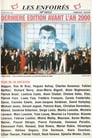
Les Enfoirés 1999 - Dernière édition avant l'an 2000
 8.0
Les Enfoirés 2001 - L'odyssée des Enfoirés
 6.0
The Red Collar
 5.4
Get Well Soon
 7.8
Les Enfoirés, 15 ans d'Enfoirés
 6.0
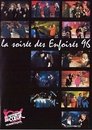
Les Enfoirés 1996 - La Soirée des Enfoirés
 8.0
Les Enfoirés 2002 - Tous dans le même bateau
 6.9
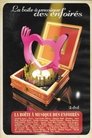
Les Enfoirés 2013 - La Boîte à Musique des Enfoirés
 5.5
Royal Palace
 7.0
Les Enfoirés 2010 - Les Enfoirés... la Crise de Nerfs
 7.0
Christmas at Bunny's
 7.0
Marie's Counter
 6.5
Les Enfoirés 2000 - Enfoirés en 2000
Filmography 39
-
2025
Vos 40 chansons préférées des Enfoirésas Self (archive footage)Movie 7.0
-
2021
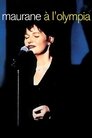
Maurane - Olympia 1999as SelfMovie
-
2018
The Red Collaras La patronneMovie 6.0
- 2014 Movie 8.0
-
2014
Get Well Soonas FrançoiseMovie 5.4
- 2013 Movie 6.9
-
2012
Départ immédiatas SelfMovie
-
2012
The Unexpected Getawayas SelfTV 8.5
-
2012
Les Enfants de la Pop 80'sas Self (archive footage)Movie
- 2011 Movie
-
2010
My Afternoons with Margueritteas FrancineMovie 7.0
- 2010 Movie 7.0
-
2009
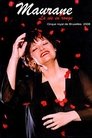
Maurane - La vie en rougeas SelfMovie
-
2009
Bulles de Vianas SelfMovie 5.0
- 2008 Movie 7.2
- 2005 Movie 7.8
-
2005
Royal Palaceas MauraneMovie 5.5
-
2005
Maurane - Master Serieas Self (archive footage)Movie
-
2004
Maurane - L'heureux Touras SelfMovie
-
2003
Autour de la guitareas SelfMovie
- 2003 Movie 5.6
-
2003
Solidarité inondationsas SelfMovie
- 2002 Movie 8.0
-
2001
Star Academyas SelfTV 5.7
- 2001 Movie 8.0
- 2000 Movie 6.5
- 1999 Movie 7.2
-
1998
Vivement dimancheas SelfTV 3.6
-
1998
Marie's Counteras JoëlleMovie 7.0
- 1997 Movie 7.0
- 1996 Movie 6.0
-
1993
Taratataas SelfTV 7.8
-
1992
Coucou c'est nous !as SelfTV 7.2
-
1987
Téléthonas SelfTV 5.0
-
1987
Le monde est à vousas SelfTV
-
1987
Sacrée soiréeas SelfTV 5.7
-
1985
Victoires de la musiqueas SelfTV 3.3
-
1982
Champs-Elyséesas SelfTV 6.8
-
1972
Le Grand Échiquieras SelfTV 8.0