8.4

Biography
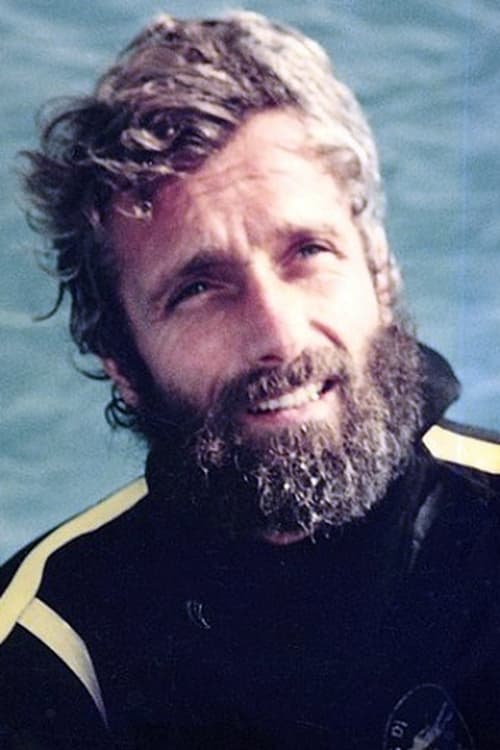
Philippe Pierre Cousteau (30 December 1940 – 28 June 1979) was a French diver, sailor, pilot, photographer, author, director and cinematographer specializing in environmental issues, with a background in oceanography. He was the second son of Jacques Cousteau and Simone Melchior.
Cousteau was proficient filming from the air, on land and underwater. He was the lead cinematographer for most of the Cousteau films during his lifetime; he was nominated for and won several awards.
Born in Toulon, Philippe Cousteau first dived with an aqua-lung in 1945 when he was 4 years old. His father brought home a miniature version of the aqua-lung he had co-invented a few years before. Though Philippe had not yet learned to swim, he followed his father into the water. Growing up, he spent each school vacation aboard his father's ship, RV Calypso.
As a teenager, he began to feel the drive to explore. While his father had pursued the horizon on the sea, Philippe Cousteau dreamed of pursuing horizons in the sky and began to study aerodynamics at the age of 16, flying first as a glider pilot, and then earning his airplane pilot license at a young age.
Cousteau spent two years in the French Navy during the Algerian war as a sonar operator and member of the landing party of the Le Normand ship, later earning his degree in science, spent another year at MIT, and then went to Paris to train in cinematography, graduating from I'École technique de photographie et de cinéma (now called École nationale supérieure Louis-Lumière) in Paris.
In 1965, Cousteau was an Oceanaut on the Conshelf III, an undersea habitat for saturated diving down to 325 feet near Ile Levant in the Mediterranean Sea. In addition to his duties as Oceanaut, Cousteau was an underwater photographer and did all of the underwater filming, which became a National Geographic documentary film that aired in 1966.
Cousteau appeared as himself on the 28 March 1966 episode of the CBS game show To Tell the Truth. He received three of the four possible votes from the panel.
In February 1967, Cousteau accompanied his father on the RV Calypso for an expedition to film the sharks of the Red Sea and the Indian Ocean. As well as being the lead photographer for the expedition, Cousteau also chronicled his experiences in the 1970 publication The Shark: Splendid Savage of the Sea.
In 1969, Cousteau lent his technical expertise to the U.S. Navy's SEALAB program. In the aftermath of aquanaut Berry L. Cannon's death while attempting to repair a leak in SEALAB III, Cousteau volunteered to dive down to SEALAB and help return it to the surface, although SEALAB was ultimately salvaged in a less hazardous way.
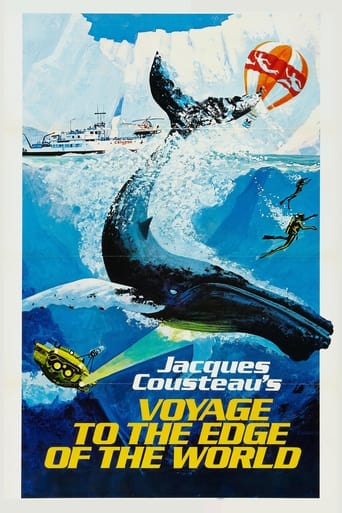
Until his death in 1979, he co-produced numerous documentaries with his father, including Voyage to the Edge of the World (1976) for the cinema and his own PBS television series, Oasis in Space (1977), concerning environmental issues.
Cousteau was a highly experienced pilot. He earned his glider pilot license at the age of 16 and went on to obtain pilot credentials to fly balloons, hang gliders, single- and multi-engine airplanes and seaplanes, gyrocopters and helicopters. ...
Source: Article "Philippe Cousteau" from Wikipedia in English, licensed under CC-BY-SA 3.0.
Known for


Filmography 22
-
2021
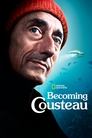
Becoming Cousteauas Self (archive footage)Movie 6.9
-
1979
The Cousteau Odyssey: The Nile Part 2as Self · Executive ProducerMovie
-
1979
The Jacques Cousteau OdysseyExecutive Producer · CreatorTV 8.4
- 1979 Movie 7.0
-
1978
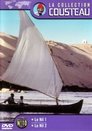
The Cousteau Collection N°8-1 | In Search of Atlantis (Part 1)as Self · DirectorMovie 5.5
- 1978 Movie 5.5
-
1977
Calypso's Search for the BritannicExecutive ProducerMovie
-
1976
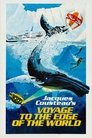
Voyage to the Edge of the Worldas Self · Producer · Director · WriterMovie 7.1
- 1976 Movie
- 1975 Movie
-
1975
Midi Premièreas SelfTV 9.0
- 1974 Movie 7.0
- 1974 Movie 6.7
- 1973 Movie 6.0
- 1973 Movie 5.5
- 1972 Movie 5.0
- 1972 Movie 6.2
- 1971 Movie 5.5
- 1969 Movie 5.5
- 1969 Movie 5.8
-
1968
The Dick Cavett Showas Self - GuestTV 6.8
-
1956
En direct de...as selfTV