 8.0


Patrick Hernandez
- Born
- Apr 6, 1949 (77 years)
- Birthplace
- Le Blanc-Mesnil, Seine-Saint-Denis, France
Biography
Patrick Pierre Hernandez (born 6 April 1949) is a French singer who had a worldwide hit with "Born to Be Alive" in 1979.
Born to a Spanish father and an Italian mother in Le Blanc-Mesnil, Seine-Saint-Denis, Hernandez grew up in the 1960s and was interested in music. He toured dancehalls and ballrooms in southern France with a number of groups over the next decade. Hernández met his music partner Hervé Tholance, an arranger, guitarist, and vocalist, during that period. The two formed a duo and achieved local success backing French musicians such as Francis Cabrel, Laurent Voulzy, and the French group Gold.
In 1978, Hernandez met the producer Jean Vanloo with disco music at its peak, and signed a recording contract. Hernández went to Waterloo, Belgium to work on songs.
After working for about a year, the songs were released on the Aariana sub-label Aquarius Records (in France) in November 1978. The first single that was released was the disco song "Born to Be Alive". Its success was immediate, and in January 1979, Hernandez received his first gold record from Italy. The song spread throughout Europe, where it hit #1 in France in April and remained there until July. By then, the United States had caught on, and after some remixing, the record was signed to the A-Tom-Mik label and later Columbia Records. The remixed version was released on a commercial 12" single; it peaked on the US Billboard disco chart at #1 and crossed over to the Billboard Hot 100 peaking at #16. It sold over one million copies in the US. The track reached #10 in the UK Singles Chart. By year's end, Hernandez had racked up 52 gold and platinum records from more than 50 countries.
While Hernandez was touring the United States, he was accompanied by Vanloo and his friend Jean-Claude Pellerin. Vanloo and Pellerin held auditions in New York that spring for dancers to accompany Hernández on his worldwide tour. The chosen dancers included a young Madonna.
Hernandez's follow-ups to "Born to Be Alive" did not fare as well in the US. "Disco Queen" backed with "Show Me the Way You Kiss" sold poorly, but the album Born to Be Alive sold well and won him a Billboard Award in February 1980. As a result of this lack of subsequent success he has earned the title of "One Hit Wonder."
In 1981, Hernandez released the import 12" single of "Goodbye", first released on Aariana Records and then a remixed version on the parent-label Aquarius Records (in France). It was not released in the US, although an album followed the single's release, but found no market in the US.
Source: Article "Patrick Hernandez" from Wikipedia in English, licensed under CC-BY-SA 3.0.
Known for


Filmography 27
-
2025
La Grande Soirée du 31 de Parisas Self : GuestMovie
-
2025
Stars 80 vs Stars 90, la grande battleas Self - GuestMovie
-
2024
Panique au 31as Patrick HernandezTV 5.3
- 2024 Movie 8.0
- 2024 TV
-
2023
Stars 80 encore !as SelfMovie 7.0
-
2022
In France with Madonnaas Self (archive footage)Movie 8.5
-
2022
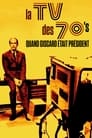
La TV des 70's : Quand Giscard était présidentas Self (archive footage)Movie 7.2
- 2020 TV 6.2
- 2019 TV
-
2018
Jean Vanloo: King of Clubsas SelfMovie
-
2017
Stars 80, la suiteas Patrick HernandezMovie 4.5
-
2017
Stars 80 - Triompheas SelfMovie 5.8
- 2015 Movie 7.3
-
2012
Stars 80as Patrick HernandezMovie 5.7
-
2001
Star Academyas SelfTV 5.7
-
1998
Ciao Darwinas Ospite MusicaleTV 7.9
-
1998
Vivement dimancheas SelfTV 3.6
-
1994
The Footy Show (AFL)as Self (archive footage)TV 6.5
- 1993 TV 6.5
-
1993
Taratataas SelfTV 7.8
-
1979
Collaro Showas SelfTV 8.0
- 1977 TV 8.0
-
1975
Numéro unas SelfTV 7.5
-
1975
Système 2as SelfTV
-
1975
Les Rendez-vous du dimancheas SelfTV 6.0
-
1975
Midi Premièreas SelfTV 9.0