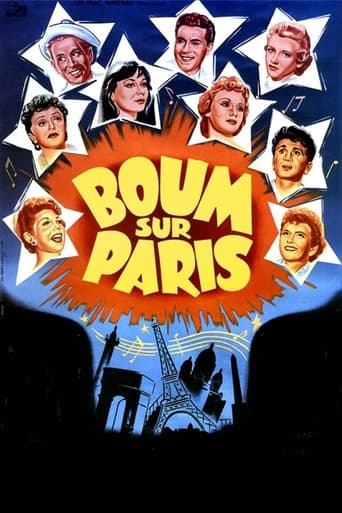
 5.7

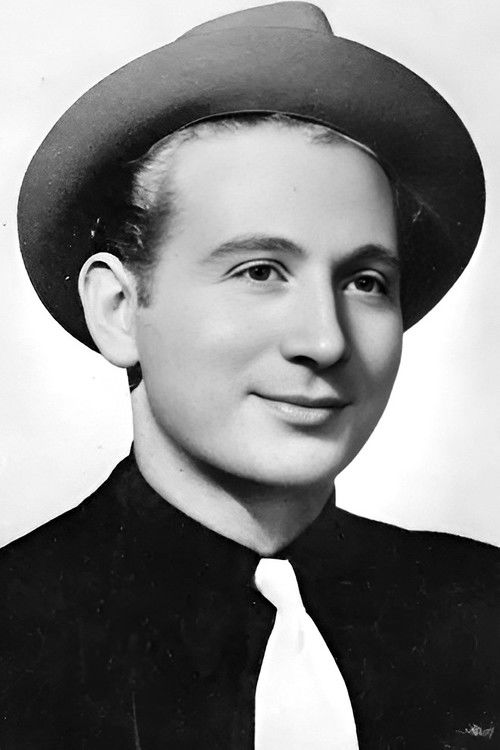
Charles Trenet
- Born
- May 18, 1913
- Died
- Feb 19, 2001 (aged 87)
- Birthplace
- Narbonne, Aude, France
- Also known as
- Louis Charles Auguste Claude Trénet · le Fou chantant
Biography
Louis Charles Augustin Georges Trenet (18 May 1913 – 19 February 2001) was a renowned French singer-songwriter who composed both the music and the lyrics for nearly 1,000 songs over a career that lasted more than 60 years. These songs include "Boum!" (1938), "La Mer" (1946) and "Nationale 7" (1955). Trenet is also noted for his work with musicians Michel Emer and Léo Chauliac, with whom he recorded "Y'a d'la joie" (1938) for the first and "La Romance de Paris" (1941) and "Douce France" (1947) for the latter. He was awarded an Honorary Molière Award in 2000.
Trenet was born in Avenue Charles Trenet, Narbonne, Occitanie, France, the son of Françoise Louise Constance (Caussat) and Lucien Etienne Paul Trenet. When he was age seven, his parents divorced, and he was sent to boarding school in Béziers, but he returned home just a few months later, suffering from typhoid fever. It was during his convalescence at home that he developed his artistic talents, such as performing music, painting and sculpting. His mother remarried, and he lived with her and his stepfather, writer Benno Vigny.
In 1922, Trenet moved to Perpignan, this time as a day pupil. André Fons-Godail, the "Catalan Renoir" and a friend of the family, took him for excursions with painting. His poetry is said to have the painter's eye for detail and colour.[3] Many of his songs refer to his surroundings such as places near Narbonne, the Pyrenees and the Mediterranean coast.
He passed his baccalauréat with high marks in 1927. After leaving school, he left for Berlin, where he studied art, and later, he also briefly studied at art schools in France. When Trenet first arrived in Paris in the 1930s, he worked in a movie studio as a props handler and assistant, and later joined the artists in the Montparnasse neighbourhood. His admiration of the surrealist poet and Catholic mystic Max Jacob (1876–1944) and his love of jazz were two factors that influenced Trenet's songs.
From 1933 to 1936, he worked with the Swiss pianist Johnny Hess as a duo known as Charles and Johnny. They performed at various Parisian venues, such as Le Fiacre, La Villa d'Este, the Européen and the Alhambra. They recorded 18 discs for Pathé, the most successful of which was "Quand les beaux jours seront là/Sur le Yang-Tsé-Kiang". The Charles and Johnny records feature Hess on piano, with the two frequently singing in two-part harmonies with quickly alternating solo spots for the two. Around 1935, the duo appeared regularly on the radio on a broadcast titled Quart d'heure des enfants terribles.
The duo continued until 1936 when Trenet was called up for national service. After performing this, he received the nickname that he would retain all his life: "Le Fou chantant" (The Singing Madman). He began his solo career in 1937, recording for Columbia, his first disc being "Je chante/Fleur bleue". The exuberant "Je chante" gave rise to the notion of Trenet as a "singing vagabond", a theme that appeared in a number of his early songs and films. He shot to stardom very quickly; as Jean Cocteau put it, when Trenet sang, "He was so young, so fresh that the bar yielded to a rustic decor, the projectors became the stiff branches of a cherry tree, the microphone a hollyhock, the piano a cow." ...
Source: Article "Charles Trenet" from Wikipedia in English, licensed under CC-BY-SA.
Known for
Filmography 33
-
2023
Guet-apens, des crimes invisiblesas Self (archive footage)Movie 8.7
-
2022
Il était une fois Champs-Élyséesas Self (archive footage)TV 6.5
-
2022
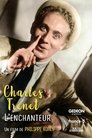
Charles Trenet, l'enchanteuras Self (archive footage)Movie 8.0
-
2022
La TV des 70's : Quand Giscard était présidentas Self (archive footage)Movie 7.2
-
1987
Le monde est à vousas Self (archive footage)TV
-
1987
Sacrée soiréeas Self · as Self (voice)TV 5.7
-
1985
Victoires de la musiqueas SelfTV 3.3
-
1984
La Chance aux chansonsas Self (archive footage) · as SelfTV 6.5
-
1982
Champs-Elyséesas SelfTV 6.8
-
1975
Numéro unas SelfTV 7.5
-
1975
Système 2as SelfTV
-
1975
Les Rendez-vous du dimancheas SelfTV 6.0
-
1975
Apostrophesas SelfTV 8.5
-
1975
Midi Premièreas SelfTV 9.0
-
1972
Midi trenteas SelfTV 6.0
-
1972
Le Grand Échiquieras Self · as Self - Main GuestTV 8.0
-
1971
Cadet Rousselleas SelfTV
-
1971
La Lucarne magiqueas The mysterious manMovie
-
1971
Samedi soiras SelfTV 6.0
- 1965 Movie 4.0
-
1965
Dim Dam Domas SelfTV 7.3
-
1957
It Happened on the 36 Candlesas Self (uncredited)Movie 5.5
-
1957
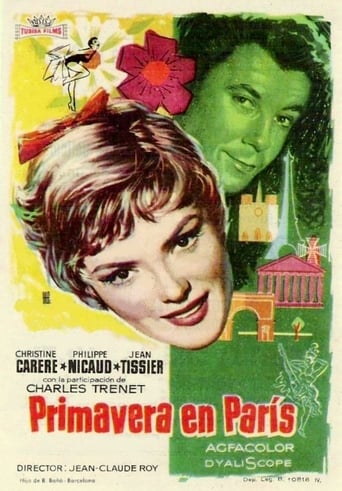
Springtime in Parisas Charles TrenetMovie 4.2
-
1956
Melodie der Weltas SelfTV
-
1954
Boom on Parisas lui-mêmeMovie 5.7
-
1952
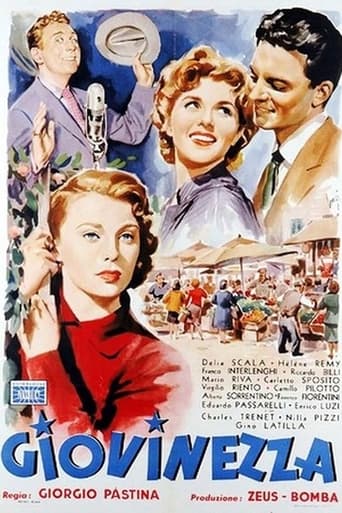
Giovinezzaas CantanteMovie 9.0
-
1951
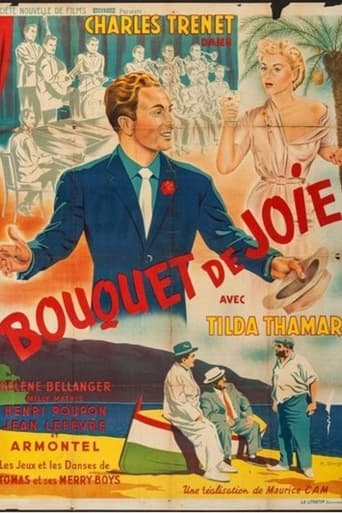
Bouquet de joieas Charles TrenetMovie 5.0
-
1943
Love Around the Clockas CharlesMovie 6.3
-
1943
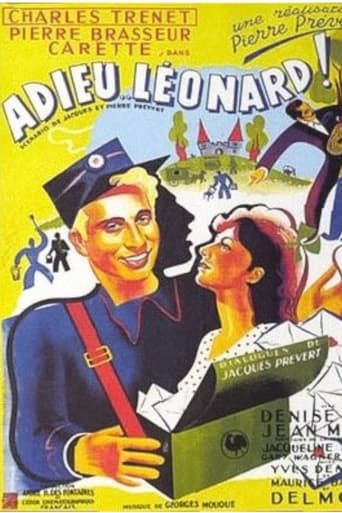
Adieu Léonardas LudovicMovie 5.6
-
1942
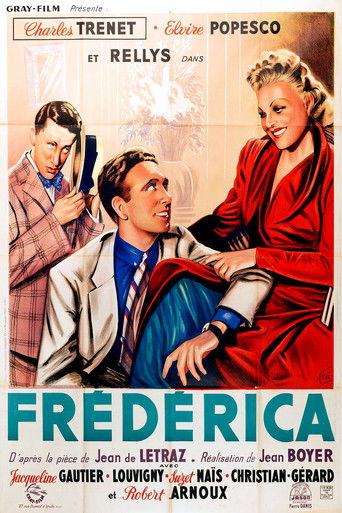
Frédéricaas Gilbert LegrantMovie 5.5
-
1941
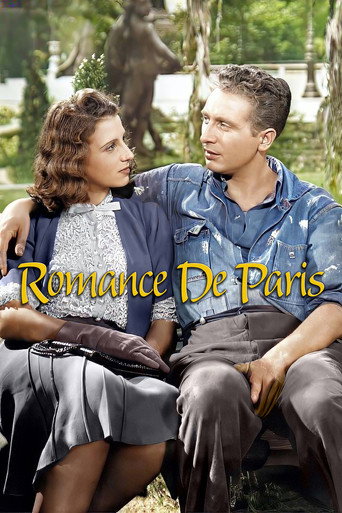
Paris Romanceas Georges GauthierMovie 5.8
-
1938
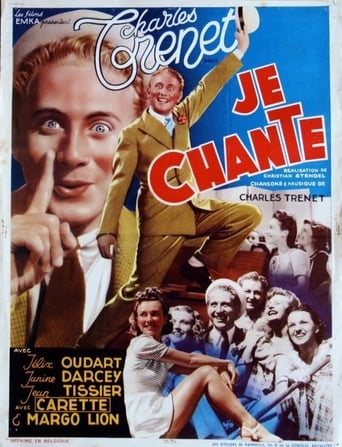
I Singas CharlesMovie 6.0
-
1938
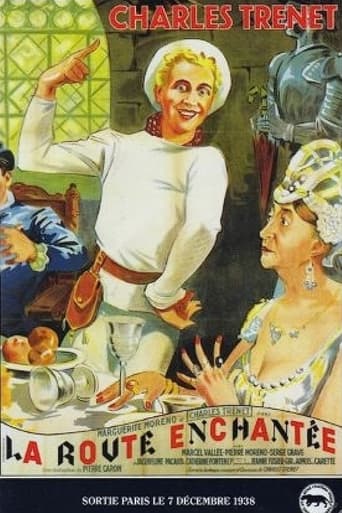
The Enchanted Roadas Jacques MinervoisMovie 7.0